Why Pharmacology Matters on the NCLEX
Pharmacology questions test safe nursing practice. You’ll apply drug knowledge, spot risky side effects, teach patients, and choose the safest first action. Think less about memorizing lists and more about recognising patterns across drug classes.
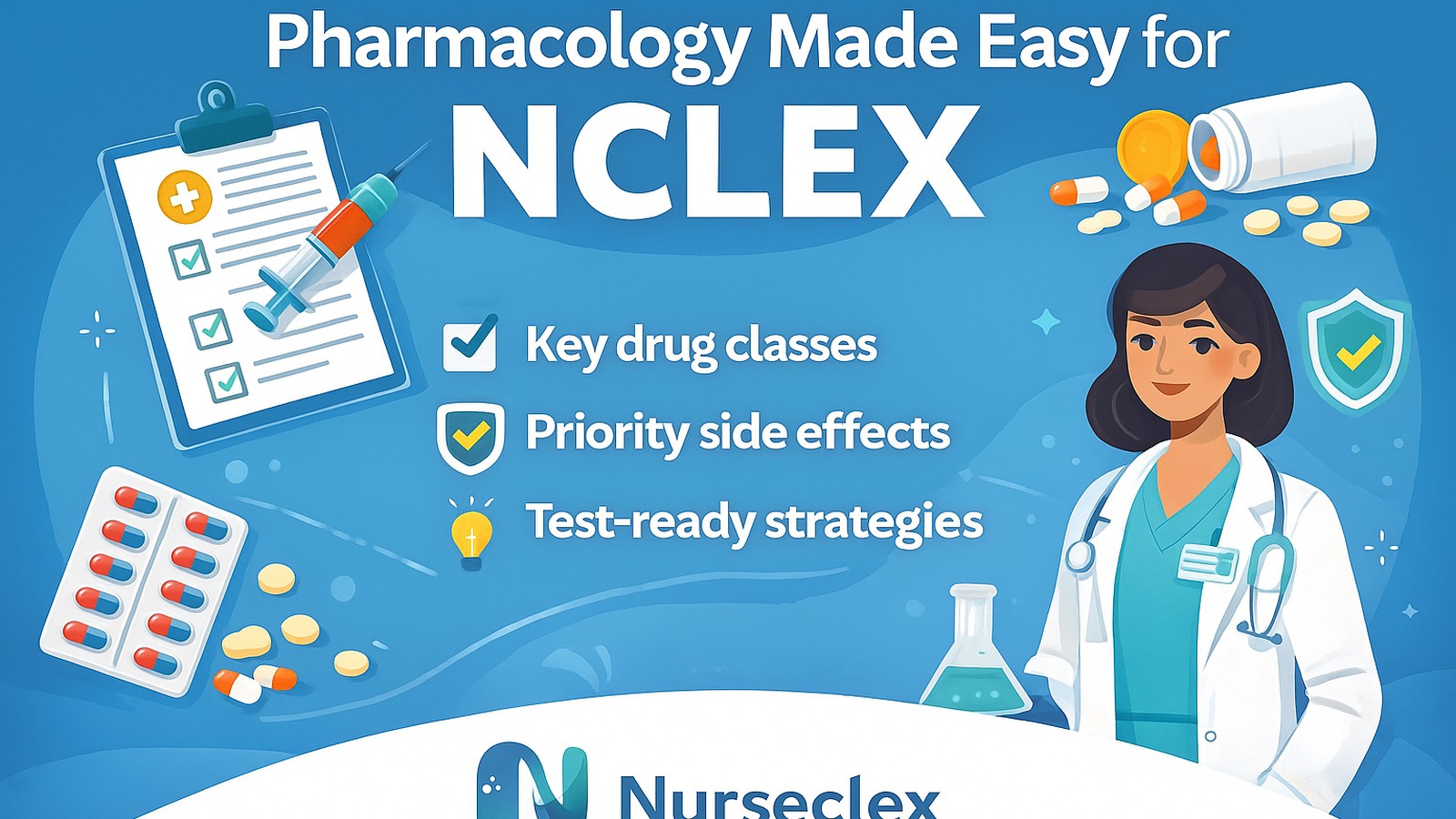
Pharmacology Made Easy for NCLEX: Fast Foundations
-
Pharmacokinetics: how the body handles a drug (absorb, distribute, metabolize, excrete).
-
Pharmacodynamics: how the drug affects the body.
-
Therapeutic Index (TI): narrow TI = higher toxicity risk (e.g., digoxin, lithium, warfarin).
-
Safety first: if a choice prevents harm, it’s often right.
High-Yield Drug Classes (with safety cues)
Antihypertensives
-
ACE inhibitors (-pril): cough, angioedema, ↑K⁺.
-
Beta-blockers (-olol): bradycardia; avoid in acute asthma/bronchospasm.
-
Calcium channel blockers (e.g., amlodipine): hypotension, edema; no grapefruit juice.
Cardiac meds
-
Digoxin: hold if HR < 60; toxicity = N/V, vision changes.
-
Diuretics (furosemide): watch K⁺, dehydration, orthostatic hypotension.
Anticoagulants/antiplatelets
-
Heparin: aPTT monitoring; protamine = antidote.
-
Warfarin: INR target per protocol; vitamin K = antidote; steady vitamin K intake.
Antibiotics
-
Aminoglycosides: oto/nephrotoxicity—monitor troughs/creatinine.
-
Tetracyclines: no dairy/iron, photosensitivity, avoid in pregnancy/children.
Endocrine
-
Insulins: match type to timing; risk = hypo-glycemia.
-
Metformin: hold for contrast dye; GI effects common.
Tip: Learn the class pattern: suffixes, must-monitor labs, top adverse effects, and first nursing action.
Smart Study That Sticks
-
Mnemonics: “LOL slows the heart” (beta-blockers), “ACE = Angioedema, Cough, ↑Electrolytes (K⁺).”
-
Active recall: flashcards for class → indication → danger sign → first action.
-
Teach-back: explain a drug to a “patient” in one minute.
-
Mini-maps: drug class in the center; branches = assessment, labs, teaching, hold-parameters.
How to Answer Pharmacology Questions
-
Name the problem: What is unsafe right now?
-
Scan vitals/labs: Any red flags (HR < 60 on digoxin, K⁺ out of range, aPTT/INR too high)?
-
Choose safety first: Hold/assess before giving when danger signs appear.
-
Pick the tightest rationale: Protocol target or toxicity prevention beats a vague teaching point.
Micro-Practice (NCLEX-style)
-
Lisinopril teaching: best point? → “Check BP regularly; report facial swelling immediately.”
-
Albuterol effective? → improved breath sounds and ↑ SpO₂.
-
Warfarin safety? → consistent vitamin K intake; report bleeding; INR per protocol.
-
Furosemide priority lab? → potassium.
-
Digoxin hold rule? → apical HR < 60 bpm.
Pharmacology Made Easy for NCLEX: Build a Plan
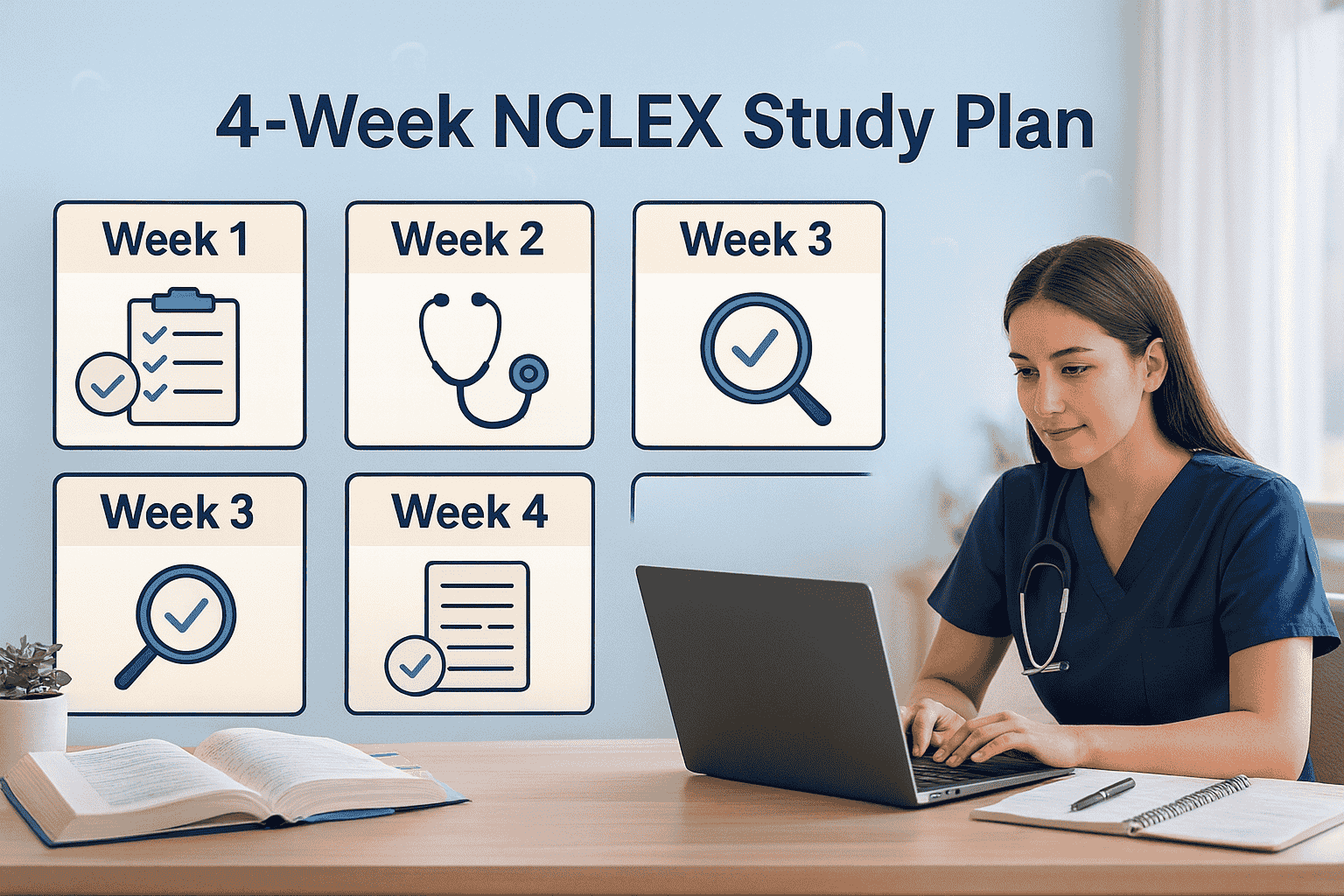
4-Week sprint
-
Daily: 40–60 mixed questions + 15 min rationales.
-
3×/week: one drug class deep-dive (pattern, labs, red-flags, teaching).
-
Weekly: one timed simulator block (focus on pharm safety).
8–12 Week builder
-
Alternate content days (systems + drug classes) with question days.
-
Add one NGN case per week to practice rationale-level thinking.
Explore these to reinforce the above:
Common Pitfalls (and fixes)
-
Memorizing every drug: Learn class patterns and danger signs.
-
Skipping vitals/labs: Tie each drug to a must-check (HR for digoxin, K⁺ for diuretics, aPTT/INR for anticoagulants).
-
Teaching before stabilizing: Stabilize first, then educate.
Conclusion
Keep pharmacology pattern-based and safety-first. Pair short content review with daily questions and NGN-style practice. With consistent reps on Nurseclex, pharmacology made easy for NCLEX becomes your edge—not your stressor.
Related blogs



Recent posts