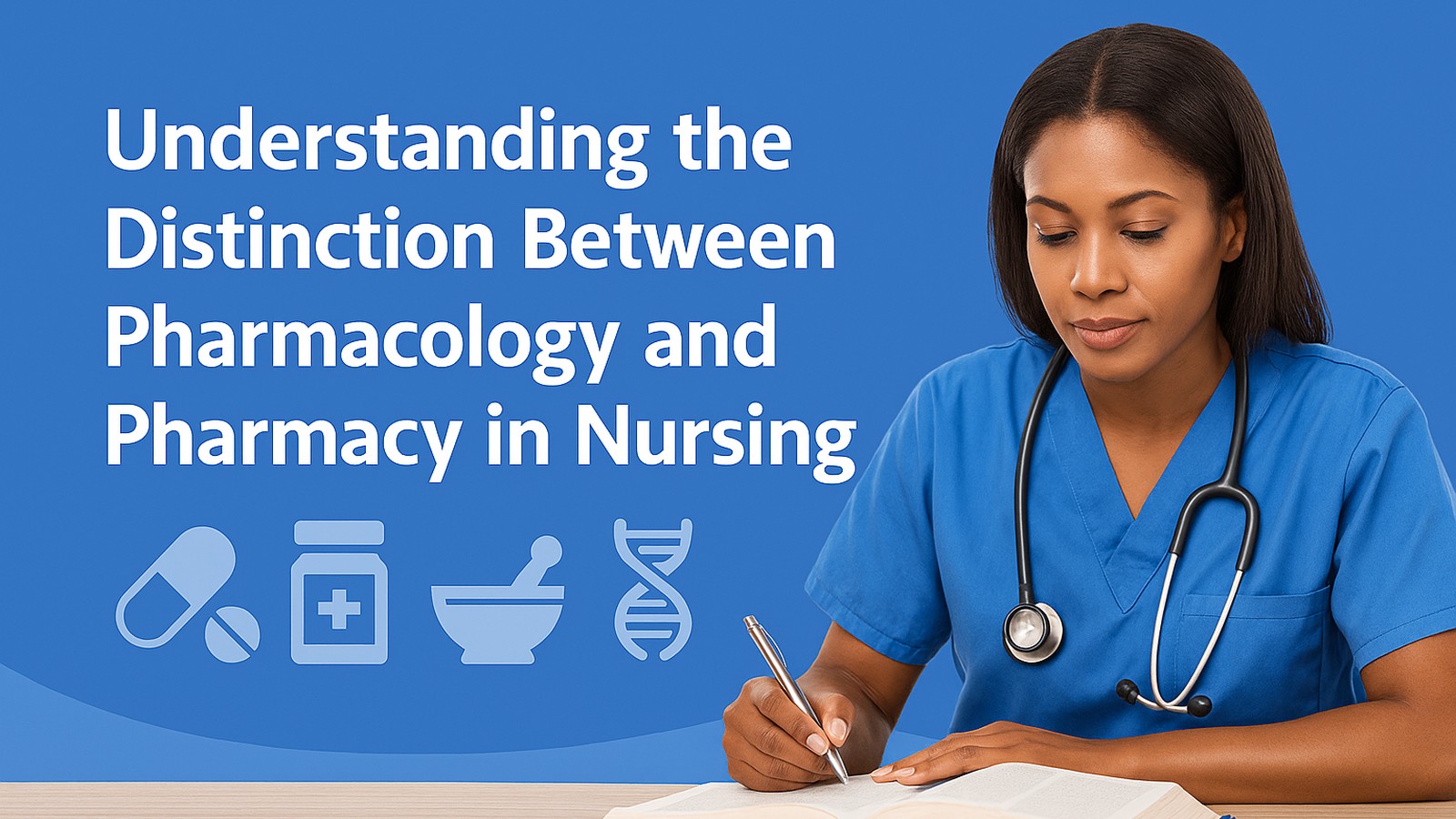
Why “pharmacology vs pharmacy” matters
Nurses give medications every day. Safe care depends on two things:
-
Pharmacology: how drugs work and what they do to the body.
-
Pharmacy: how medications are prepared, dispensed, and managed.
You need both to answer NCLEX questions and to practice safely at the bedside.
What is pharmacology?
Pharmacology is the science of drugs.
You’ll use it to:
-
Explain mechanisms of action (e.g., beta-blockers lower HR/BP by blocking β-receptors).
-
Work by drug class patterns (ACE inhibitors “-pril,” beta-blockers “-olol,” calcium channel blockers “-dipine”).
-
Apply PK vs PD:
-
Pharmacokinetics (PK) = what the body does to the drug (absorb, distribute, metabolize, excrete).
-
Pharmacodynamics (PD) = what the drug does to the body (therapeutic effect, adverse effect, toxicity).
-
High-yield safety flags
-
Digoxin: nausea, vision changes, bradycardia → check K⁺ and level.
-
ACE inhibitors: cough, angioedema, hyperkalemia → hold and assess.
-
Aminoglycosides: oto-/nephrotoxicity → renal labs, drug levels.
-
Anticoagulants/antiplatelets: bleeding risks → labs, teaching.
NCLEX tip: Think “PK = movement; PD = effect.” Many items ask which finding proves effectiveness or signals danger.
What is pharmacy?
Pharmacy is the health profession that ensures medications are accurate and safe.
Core pieces you’ll see:
-
Dispensing accuracy: right drug, dose, route, form, label.
-
Patient counseling: how to take it, major effects, food/drug interactions (e.g., grapefruit with some CCBs).
-
Medication management: dose adjustments for renal/hepatic disease; monitoring narrow-TI drugs (warfarin, lithium, digoxin).
-
Regulatory safeguards: verification, records, controlled substances, error prevention systems.
Pharmacology vs pharmacy at the bedside (how they meet)
-
Nursing decisions use pharmacology: hold parameters, labs, adverse effects, teaching.
-
Safe delivery relies on pharmacy: correct product, compatibility checks, timing, and access.
-
Teamwork: nurses often consult pharmacists for dose ranges, IV compatibility, or monitoring plans.
NCLEX link: Items rarely want brand names. They test whether you choose the safest first action inside a medication scenario.
A simple safety flow you can reuse
-
ABCs → Safety → Stability → Time-sensitive.
-
Confirm the five rights (+ document + educate).
-
Ask: “Is this within scope and protocol?”
-
If unsafe finding → assess, hold, and notify as needed.
Study plan to master both (and score higher)
-
Learn by class, not lists. Capture one-line “micro-rules” (e.g., “New neuro deficit on anticoagulant = hold and assess now”).
-
Practice with rationales every day; note why wrong options are unsafe.
-
Case studies/NGN: practice recognize → analyze → act.
-
Teach-back: explain a class to a “patient” in plain words.
-
Mix with priority & delegation sets—many pharm items are wrapped in prioritization.
More on Nurseclex
External reference: See the NCSBN NCLEX Test Plan for current medication-related expectations.
Bottom line
-
Pharmacology explains why a medication helps or harms.
-
Pharmacy ensures the medication is prepared and used safely.
-
Together, they power safer bedside decisions and better NCLEX outcomes.
Mastering pharmacology vs pharmacy builds confidence, protects patients, and improves scores.
Related blogs

Recent posts