
If Med-Surg feels huge, you’re not alone. The NCLEX tests how safely you apply knowledge—not how much you memorized. Use this focused guide to study the Med-Surg NCLEX topics that appear most and matter most for safe care.
How to use this guide
-
Skim each system.
-
Note red-flag findings and first actions.
-
Drill questions daily and review rationales.
1) Cardiovascular (always high yield)
-
Heart failure: Left vs right signs; daily weights; edema; diuretics; low-sodium diet.
Red flags: Pink frothy sputum, new crackles, acute dyspnea → sit up, O₂, notify. -
Myocardial infarction (MI): Chest pain, diaphoresis, N/V.
First steps: O₂, 12-lead ECG, aspirin (if not contraindicated), nitro per protocol. -
Hypertension: Lifestyle (DASH, exercise), meds (ACEi “-pril,” BB “-olol”).
Watch for: ACEi cough/angioedema, hyperkalemia.
Practice tip: Mix priority + pharm items for these Med-Surg NCLEX topics to build clinical judgment.
2) Respiratory (oxygenation is priority)
-
COPD: Low-flow O₂, pursed-lip breathing, prevent infection.
Avoid: Excess O₂ in CO₂ retainers without orders/targets. -
Asthma: Rescue vs maintenance inhalers; peak-flow zones.
Red flag: Silent chest = severe obstruction. -
Pneumonia: Fever, crackles, productive cough.
Actions: Incentive spirometry, mobilize, antibiotics as ordered.
3) Endocrine (diabetes & thyroid)
-
Diabetes: Insulin timing (onset/peak/duration); hypoglycemia vs DKA.
DKA clues: Fruity breath, Kussmaul breathing, high glucose + ketones. -
Thyroid:
Hypo: Fatigue, weight gain, bradycardia.
Hyper: Heat intolerance, tachycardia; thyroid storm = emergency.
4) Gastrointestinal
-
Peptic ulcer disease: H. pylori, NSAIDs; bleeding risk (melena, hematemesis).
-
IBD: Crohn’s vs UC—location, bleeding, complications.
-
Cirrhosis: Ascites, encephalopathy (asterixis), bleeding risk; monitor ammonia, safety.
5) Renal (fluids & electrolytes)
-
AKI vs CKD: Causes, labs (BUN/Cr, GFR), strict I&O, daily weights.
-
Dialysis: Pre/post care, fistula assessments (thrill/bruit), hold nephrotoxic meds per orders.
6) Neurological
-
Stroke (CVA): FAST; time-critical thrombolytics for ischemic stroke.
-
Seizures: Airway/safety first, side-lying, time the event—no objects in mouth.
-
↑ ICP: Early headache, restlessness; HOB ~30°, neutral neck, limit stimuli.
7) Infection control & isolation
-
Precautions:
Airborne: TB, measles (N95).
Droplet: Flu, meningitis (mask).
Contact: C. diff, MRSA (gloves/gown; soap & water for C. diff).
8) Fluids & electrolytes (test makers love these)
-
Sodium:
Hypo: Confusion, seizures.
Hyper: Thirst, neuro changes. -
Potassium:
Hypo: Weakness, U waves.
Hyper: Peaked T waves—address quickly per protocol.
9) Perioperative & wound care
-
Pre-op: Consent verified, NPO, baseline vitals.
-
Post-op: Airway, breathing, circulation; pain; early DVT prevention.
-
Wounds: Drainage types, infection vs normal healing.
10) Patient safety & quality
-
Med safety: 5 rights, high-alert meds (insulin, heparin).
-
Falls: Alarms, non-skid socks, hourly rounding.
-
Prioritization: ABCs → safety → stability → time-sensitive problems.
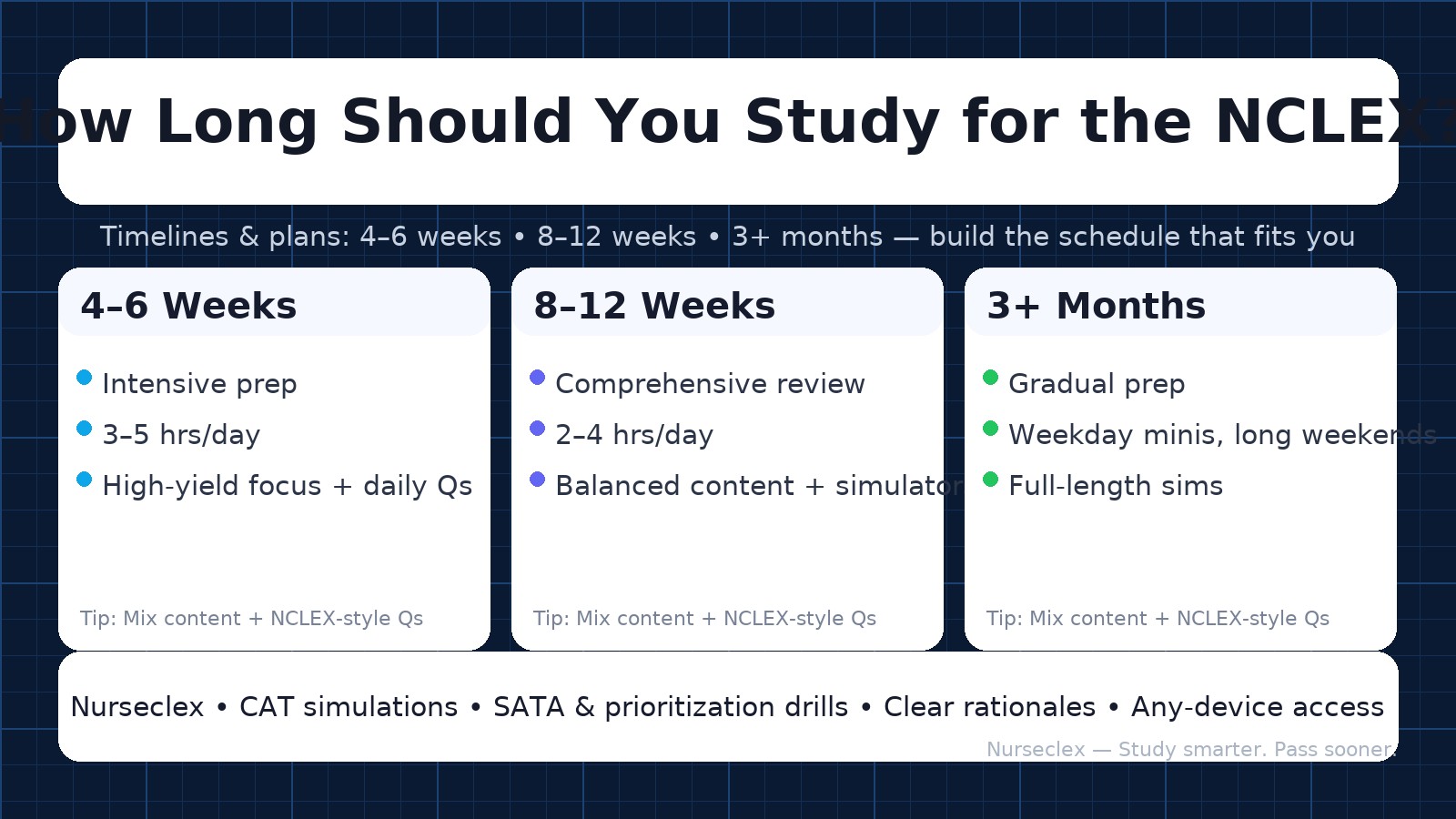
Smart study plan for Med-Surg NCLEX topics
-
Daily: 50–75 mixed questions + rationale review.
-
2–3×/week: Short system refresh + focused set (e.g., cardio 25 Qs).
-
Weekly: One simulated block (CAT-style) to build stamina and pacing.
More reading
CTA
Ready to drill the highest-yield Med-Surg NCLEX topics with realistic rationales? Practice adaptive blocks and NGN-style cases on Nurseclex to boost speed, safety, and confidence before test day.
Related blogs

Recent posts