What “NCLEX at home 2026” really means
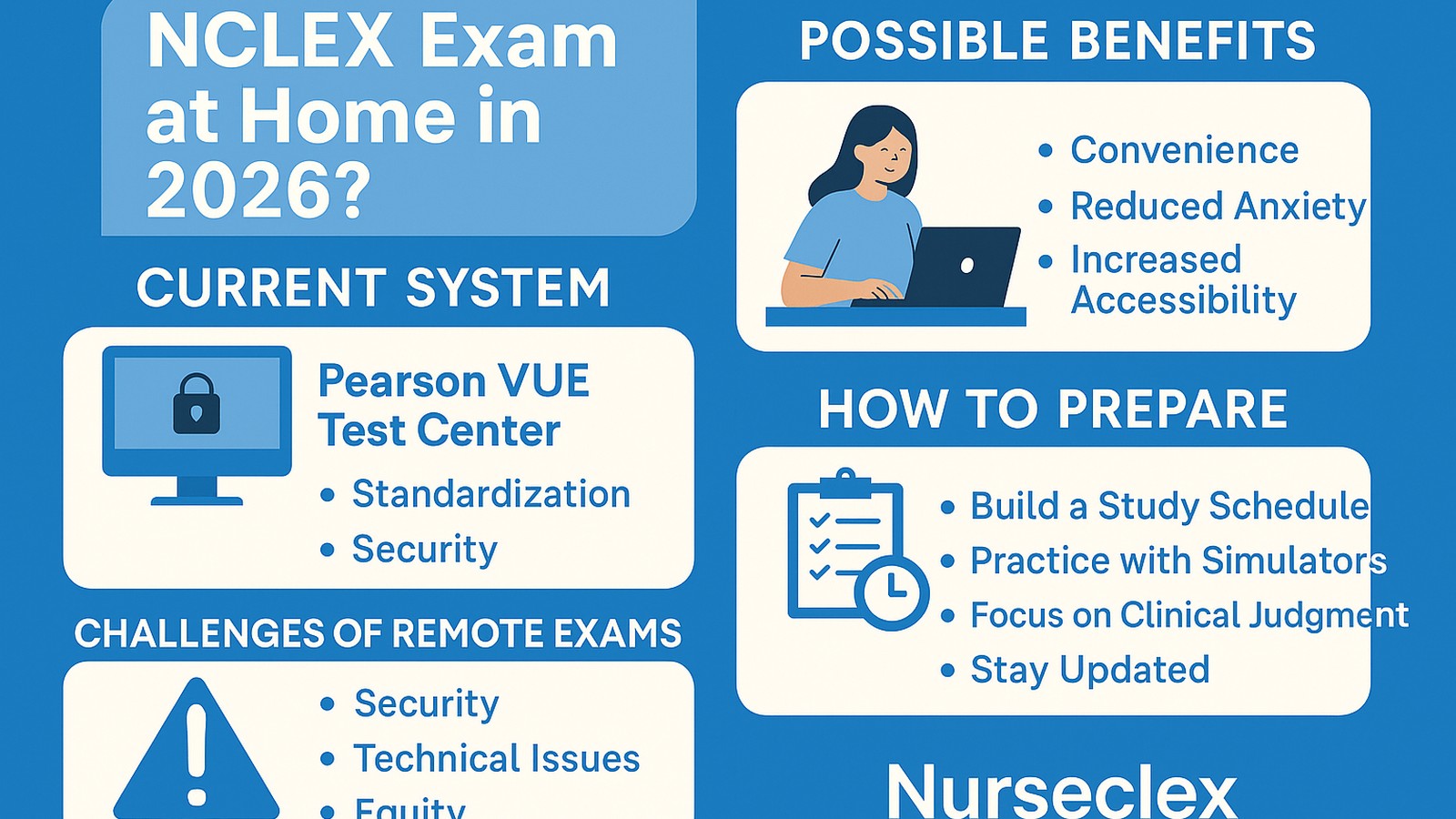
The NCLEX is the final step before licensure. Today, it runs only in Pearson VUE test centers. Security, standardization, and reliability drive that choice. Because remote exams grew after the pandemic, many graduates now ask if NCLEX at home 2026 could happen. Here’s the clear, current picture—plus how to prepare either way.
How NCLEX testing works right now
-
Location: Pearson VUE centers (in person).
-
Why: Consistent rules, verified identity, locked-down testing stations, fewer tech failures.
-
Result: A fair and defensible measure of minimum safe practice for entry-level nurses.
Common hurdles with in-person exams
-
Travel and access in rural areas
-
Limited seat availability
-
High test-center anxiety
Could NCLEX be remote by 2026?
There is no official confirmation that you can take the NCLEX at home in 2026. A change this big would require pilots, strict identity controls, AI-assisted proctoring, and broad tech support. Expect test-center delivery to continue through 2026, with any remote options (if they come) likely rolled out in phases.
Why people want at-home testing
-
Convenience and fewer travel costs
-
More flexible scheduling
-
A familiar setting may reduce nerves
What must be solved first
-
Security: Preventing impersonation and outside help
-
Equity: Stable internet, private space, and compatible hardware for all candidates
-
Consistency: Same rules and reliability across thousands of sessions
If policies change: how NCLEX at home 2026 could look
-
Verified ID checks and full room scans
-
Always-on webcam and microphone monitoring
-
Strict no-notes, no-devices standards
-
Clear restart procedures for power or internet issues
Until that is official, plan on test-center NCLEX and stay tuned to updates from the NCSBN and Pearson VUE.
Prep that works—regardless of location
1) Learn the format (NGN + CAT).
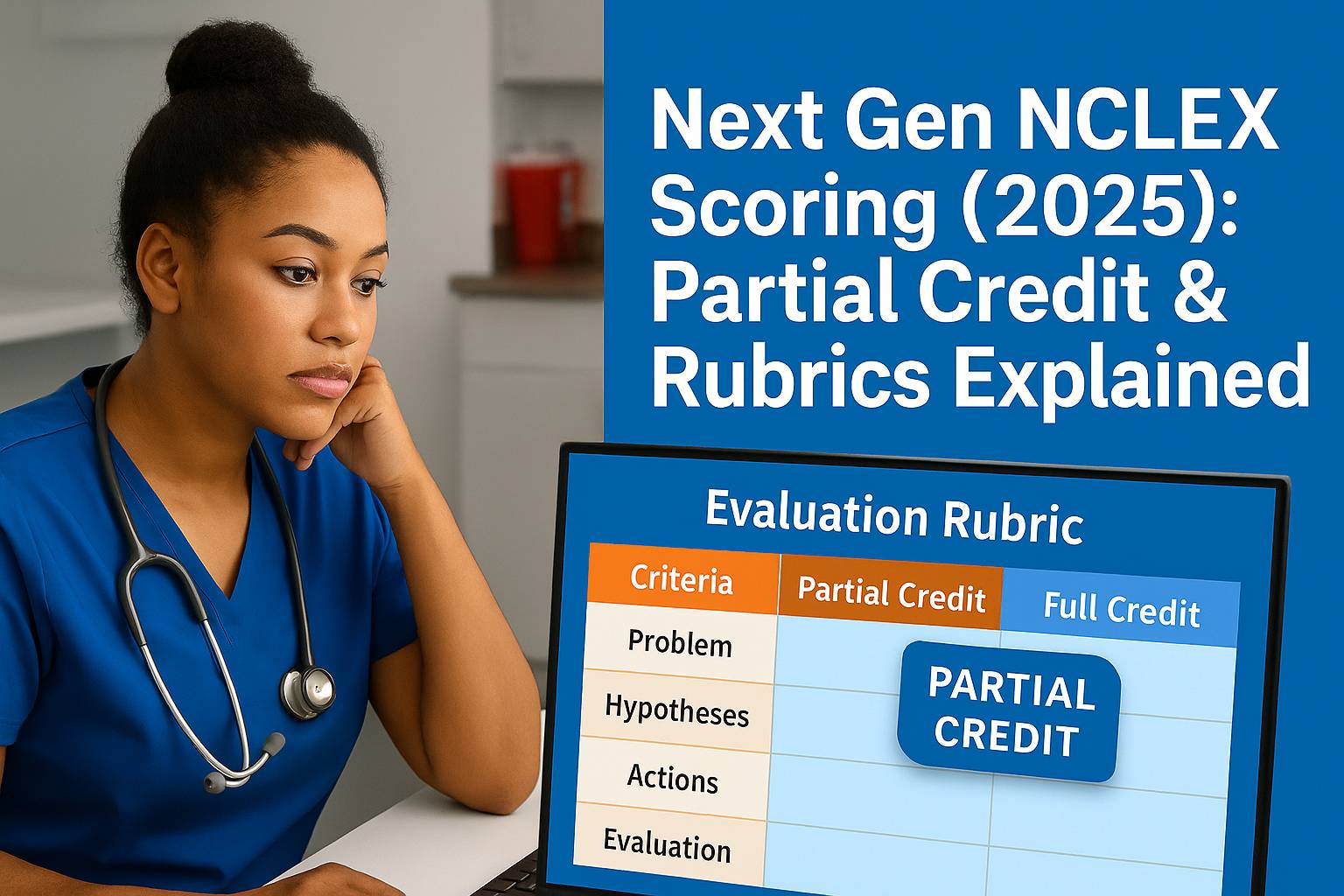
The exam uses Computerized Adaptive Testing (CAT) and new Next Gen item types: matrix/grid, bow-tie, drop-down rationale, and trend items. Know how each scores (many use partial credit).
2) Practice like the real thing.
Use timed sets and full simulations to build pacing and stamina. Treat every practice as a mini “dress rehearsal.”
3) Debrief smarter, not longer.
After each session, write one micro-rule from every miss, e.g., “New neuro deficit → assess first, then notify.” Revisit these rules daily.
4) Hit high-yield content.
Safety/infection control, prioritization & delegation, pharmacology, cardio/resp, and labs show up often. Master frameworks: ABCs → Safety → Stability → Time-sensitive.
5) Protect your focus.
Sleep well, hydrate, eat light, and use a brief breathing routine before long practice blocks.
Also Read:
For official policy updates, see the NCSBN’s NCLEX overview and announcement pages.
Why Nurseclex is built for NGN (and CAT)
-
NGN-style case sets & item types mapped to the Clinical Judgment Model
-
CAT simulators that mirror adaptive difficulty and timing
-
Clear rationales & analytics to convert errors into durable micro-rules
Start with one NGN case set, then run a CAT sim. Repeat weekly to lock in confidence.
Related blogs


Recent posts