Preparing for the NCLEX can feel overwhelming. The good news: you don’t have to guess your way through prep. NCLEX simulators replicate the real exam experience—so you can practice under pressure, build critical judgment, and learn exactly how the test feels before test day.
Below is a simple, effective way to use simulators to boost confidence and pass sooner.
What Are NCLEX Simulators?
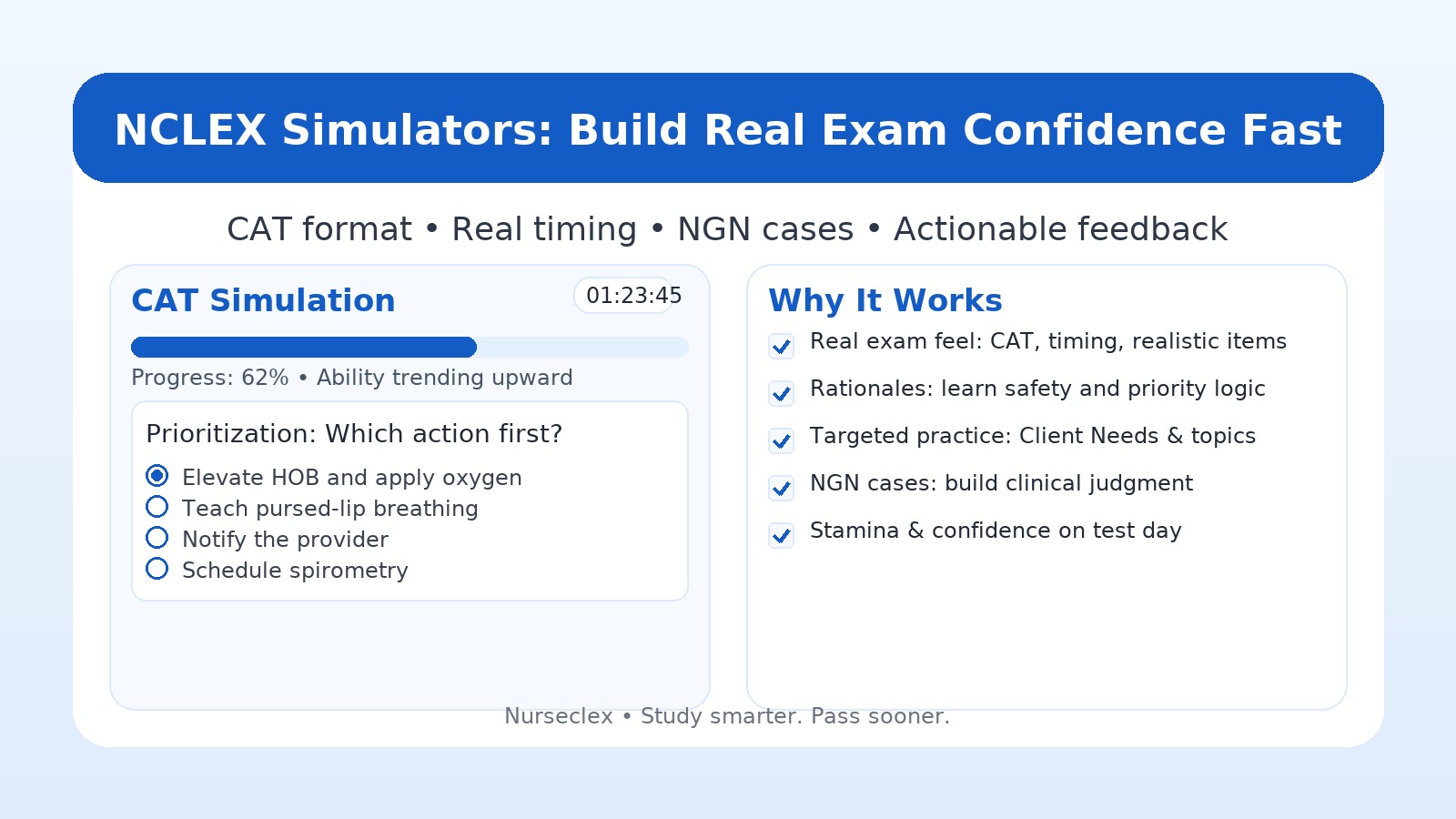
NCLEX simulators are online practice exams that mirror the real test—Computerized Adaptive Testing (CAT), timing, item types, and difficulty curve.
You’ll experience:
-
Questions that adapt to your performance
-
A test that stops once ability is determined
-
Timed sessions to build stamina and focus
Think of it as a dress rehearsal for exam day.
6 Benefits of Using NCLEX Simulators
1) Realistic exam experience
You’ll practice the pacing, pressure, and unpredictability of the NCLEX—so the real thing won’t feel new.
2) Immediate feedback with rationales
High-quality simulators give clear explanations for right and wrong answers so you can:
-
Spot weak areas (pharm, peds, delegation)
-
Correct strategy errors (teaching before stabilizing, scope mistakes)
3) Targeted practice—by need and topic
Customize sessions by Client Needs or specialty (pediatrics, mental health, pharmacology). Mix comprehensive exams with focused quizzes.
4) Better clinical judgment (NGN-style)
Good simulators include case studies, trend items, and delegation tasks so you think like a nurse—not just a test-taker.
5) Stronger test-taking strategy
Practice the habits that score points:
-
Eliminate unsafe/out-of-scope options first
-
Anchor to ABCs → Safety → Stability → Time-sensitive
-
Pace—don’t stall on one item
6) Confidence through familiarity
Repetition builds stamina, reduces anxiety, and makes exam day feel like “just another practice run.”
How to Use NCLEX Simulators in Your Study Plan
Step 1: Schedule short + long sessions
-
Weekdays: 2–3 short quizzes (15–25 Qs)
-
Weekends: 1 full simulated exam (CAT or fixed-length)
Step 2: Analyze, don’t just score
After each session, ask:
-
Did I misread the stem or priority?
-
Was it content or strategy?
-
What’s my micro-rule for next time? (e.g., “Stabilize before teaching”)
Track in a simple error log: Content / Strategy / Careless.
Step 3: Combine with focused review
Pair simulators with:
-
Study guides for quick refreshers
-
Flashcards for pharm and labs
-
Mini-cases for delegation and prioritization
Step 4: Simulate real test conditions (2×)
Do at least two full CAT runs:
-
Quiet room, no phone
-
Breaks only as allowed
-
Snack/hydration plan as on test day
Step 5: Use Nurseclex for smarter practice
At Nurseclex, you’ll get:
-
Realistic CAT simulators
-
NGN-style cases with step-by-step rationales
-
Topic-based drills and readiness analytics
Common Mistakes (and Quick Fixes)
-
Chasing scores only → Focus on why answers are right or wrong.
-
Skipping reflection → Write a 1-line fix in your error log.
-
Ignoring stamina → Add a weekly full-length session.
-
Random practice only → Alternate focused and mixed blocks.
-
Teaching before stabilizing → Safety first, then education.
Mini Checklist Before Your Next Simulator
-
Read the stem twice; name the priority problem.
-
Apply ABCs → Safety → Stability → Time-sensitive.
-
Eliminate unsafe/out-of-scope options first.
-
Stabilize before teaching.
-
After selecting, ask: Does this action improve safety now?
Conclusion: Confidence Through Practice
NCLEX simulators remove the guesswork from prep. They build real exam stamina, sharpen clinical judgment, and make test day familiar—not scary. Pair them with targeted review and you’ll study smarter, not longer.
Ready to practice like it’s the real thing?
Jump into a CAT Simulation → and explore the QBank Hub With Nurseclex, you’re training for safe practice—and a first-time pass.